
Professional medical scrubs are part of the daily work environment for nurses, medical assistants, physicians, dental staff, veterinary teams, technicians, and healthcare students. The right scrubs should support movement, comfort, coverage, hygiene routines, and a polished clinical appearance without making the workday harder.
Choosing scrubs is not only about color or size. Healthcare workers need to consider fabric, fit, pockets, pant length, workplace dress codes, laundering needs, and shift demands. A good source for professional medical scrubs should make it easier to compare styles, brands, sizing, and work-ready features before buying.
Quick Answer
Healthcare workers should choose medical scrubs based on workplace dress code, correct fit, breathable fabric, stretch, pocket layout, pant length, durability, and ease of care. Scrubs should allow comfortable movement during long shifts while maintaining professional coverage and appearance.
A practical scrub-buying checklist includes:
- Confirm required workplace color
- Choose women’s, men’s, or unisex fit carefully
- Check petite, regular, tall, or short pant length
- Look for stretch and breathability
- Review pocket placement
- Choose fabric that can handle frequent washing
- Make sure tops provide proper shoulder movement
- Make sure pants stay secure while bending or walking
- Check return and exchange policies
- Compare brands before buying several sets
Why Professional Medical Scrubs Matter
Medical scrubs are not ordinary clothing. They are worn in fast-moving environments where workers may stand for long periods, assist patients, bend, lift, walk between rooms, chart, clean equipment, and manage small tools or supplies. A poorly chosen scrub set can become distracting when it pulls, overheats, drags, gaps, wrinkles heavily, or lacks useful pockets.
Professional scrubs should help healthcare workers maintain:
- Comfortable movement
- Workplace-appropriate coverage
- Clean appearance
- Practical storage
- Easy laundering
- Consistent team presentation
- Confidence during patient-facing work
Healthcare workplaces also involve safety expectations beyond clothing. OSHA notes that healthcare settings can involve hazards related to ergonomics, biological exposure, chemicals, workplace violence, and other risks. Scrubs are only one part of a broader work environment, but they should support safe, practical movement during daily care tasks. OSHA’s overview of healthcare workplace safety gives broader context.
Start With the Workplace Dress Code
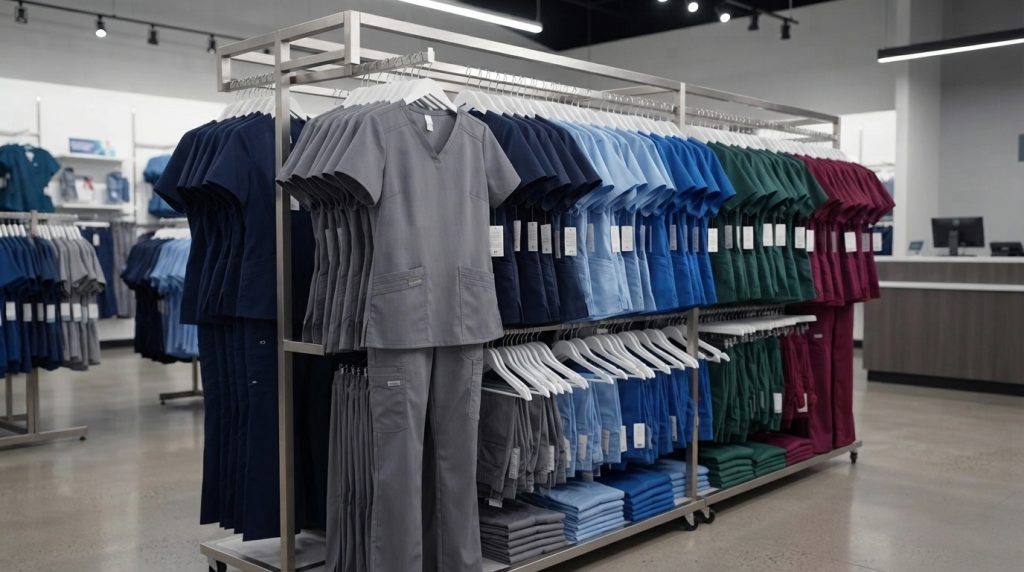
Before buying scrubs, healthcare workers should confirm the employer’s dress code. Many hospitals, clinics, dental offices, labs, veterinary practices, and training programs use specific uniform requirements.
Common dress code rules
A workplace may define:
- Required scrub color
- Department-specific color coding
- Approved jacket colors
- Whether underscrubs are allowed
- Whether joggers are acceptable
- Whether embroidery is required
- Whether logos or names must appear on tops
- Whether lab coats are required
- Whether patterned scrubs are allowed
- Whether shoes or accessories must meet certain standards
Color is often the first rule to check. A nurse may need navy, ceil blue, royal blue, wine, teal, pewter, black, or another approved color. A student may need a specific school-approved uniform. A dental or medical office may require coordinated team colors.
Buying before checking the dress code can lead to returns, wasted money, or uniforms that cannot be worn at work.
Choose the Right Fit for the Role
Fit is one of the most important parts of choosing scrubs. A healthcare worker’s uniform should allow movement without feeling oversized, restrictive, or unstable.
What a good scrub fit should do
Scrubs should allow the wearer to:
- Raise arms without the top pulling too tightly
- Bend forward without the waistband slipping
- Sit and stand without fabric bunching
- Walk quickly without pant hems dragging
- Reach overhead without losing coverage
- Carry items in pockets without sagging
- Move naturally during patient care
A proper fit should feel secure but not stiff. Scrubs that are too tight may restrict movement. Scrubs that are too loose may look unprofessional, catch on surfaces, or interfere with active tasks.
Understand Women’s, Men’s, and Unisex Scrub Fits
Scrubs are commonly available in women’s, men’s, and unisex fits. These categories can make a major difference in comfort.
Women’s scrub fits
Women’s scrubs often include more shaped cuts through the shoulders, waist, hips, and thighs. They may also offer different rise options, joggers, flare pants, tapered pants, knit panels, and petite or tall lengths.
Women’s fit may be useful for workers who want:
- More shaping through the body
- Better hip and thigh proportions
- Petite or tall length options
- Flexible waistbands
- Modern necklines
- More style variety
Men’s scrub fits
Men’s scrubs are generally cut broader through the shoulders and straighter through the torso and legs. They may include chest pockets, cargo storage, zip fly pants, elastic waistbands, or athletic-inspired cuts.
Men’s fit may be useful for workers who want:
- Broader shoulder room
- Longer torso coverage
- Straight or tapered pant cuts
- Cargo pockets
- Professional but practical silhouettes
Unisex scrub fits
Unisex scrubs are usually simpler and more relaxed in shape. They can work well in some settings, but they may not fit every body type comfortably.
Unisex fit may be useful for:
- Budget-conscious buying
- Student uniforms
- Temporary uniforms
- Group settings with simple sizing needs
However, healthcare workers who struggle with shoulder fit, pant length, waist security, or hip room may prefer gender-specific options.
Pay Attention to Pant Length
Pant length is easy to overlook, but it affects comfort, appearance, and safety. Scrub pants that are too long can drag on the floor. Pants that are too short may feel awkward or fail workplace expectations.
Common scrub pant lengths
- Petite: Better for shorter inseams
- Regular: Standard length for average inseams
- Tall: Better for longer inseams
- Short: Helpful for men or women who need less length without choosing petite proportions
The right pant length should allow the wearer to walk without fabric dragging under the heel. Jogger scrubs may reduce dragging because of ankle cuffs, while straight-leg or flare styles require closer length attention.
Healthcare workers who have struggled with pant length should prioritize stores or online categories that clearly separate petite, regular, short, and tall options.
Choose Fabric Based on Shift Demands
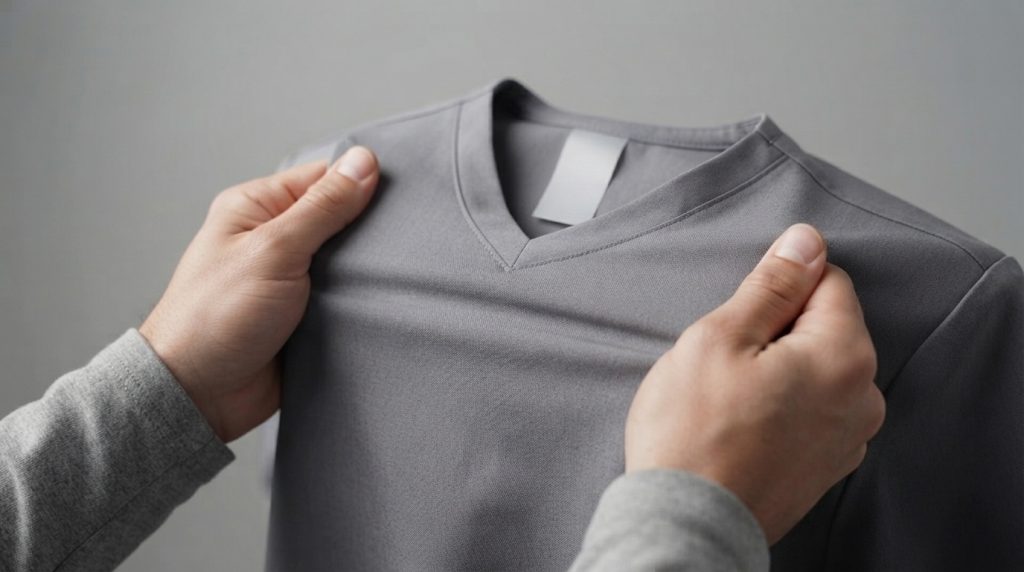
Modern scrubs are available in many fabric blends. Some feel soft and relaxed. Others are performance-focused, lightweight, stretchy, wrinkle-resistant, or structured.
Key fabric qualities
Stretch
Stretch helps with bending, reaching, lifting, sitting, and walking. Healthcare workers who move constantly often benefit from spandex or flexible blends.
Breathability
Breathable fabric helps workers stay more comfortable in warm clinics, busy units, or active roles.
Durability
Durable scrubs should hold up through repeated washing, long wear, and frequent movement.
Wrinkle resistance
Wrinkle-resistant fabric helps maintain a professional look throughout the day.
Softness
Soft fabric can make long shifts more comfortable, especially for workers with sensitive skin or long wear times.
Easy care
Most healthcare workers need scrubs that wash easily and dry without complicated care routines.
For daily clinical wear, many buyers prefer a balance of stretch, softness, breathability, and durability rather than focusing on only one feature.
Think About Long-Shift Comfort
Many healthcare workers spend long periods standing or walking. NIOSH has discussed how prolonged standing can contribute to fatigue, leg swelling, low back discomfort, and other physical strain. Proper footwear, breaks, workplace design, and movement habits matter, but clothing comfort can also affect the workday. NIOSH’s resource on prolonged standing at work explains the issue in more detail.
Scrubs designed for long shifts should reduce avoidable irritation. They should not dig into the waist, restrict shoulders, trap heat, or require constant adjustment.
Long-shift scrub features to consider
- Knit or yoga-style waistbands
- Lightweight stretch fabric
- Breathable panels or soft fabric blends
- Side vents for movement
- Jogger cuffs or correct pant length
- Tops that do not pull across the chest or shoulders
- Pockets that hold essentials without adding bulk
- Jackets or underscrubs for temperature changes
Workers buying scrubs for healthcare workers should think about how the uniform feels after eight, ten, or twelve hours, not only how it looks in the mirror.
Evaluate Pocket Layout Carefully
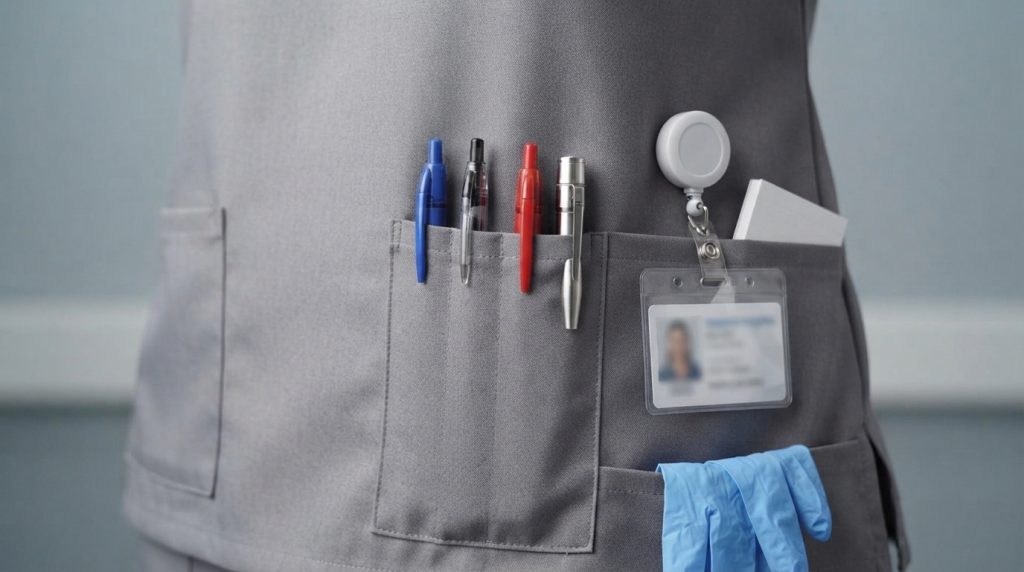
Pockets are a daily function issue. A scrub top or pant can look good but fail during work if it does not provide useful storage.
Healthcare workers may carry
- Pens
- Badge reels
- Gloves
- Phone
- Small notebook
- Alcohol pads
- Tape
- Scissors
- Penlight
- Stethoscope accessories
- Keys
- Small tools or instruments
Common scrub pocket styles
- Chest pocket
- Front patch pockets
- Cargo pockets
- Side pockets
- Zippered pockets
- Hidden pockets
- Interior pockets
- Pen slots
- Badge loops
The right layout depends on the role. A nurse may need cargo storage. A physician may prefer fewer visible pockets and a lab coat. A medical assistant may need easy-access pockets for pens and notes. A veterinary worker may prefer secure pockets that can handle active movement.
Match Scrubs to the Healthcare Role
Different healthcare roles place different demands on scrubs. The best uniform for one worker may not be ideal for another.
Nurses and CNAs
Nurses and CNAs often need scrubs that can handle movement, long shifts, and frequent pocket use.
Best features include:
- Stretch fabric
- Multiple pockets
- Comfortable waistbands
- Breathable tops
- Durable pants
- Easy laundering
- Proper coverage during bending and lifting
Medical assistants
Medical assistants often move between front-office and clinical duties. They may need scrubs that look polished but still support active tasks.
Best features include:
- Professional fit
- Practical pockets
- Comfortable tops
- Matching jackets
- Easy-care fabric
- Color consistency for clinic teams
Physicians and advanced practice providers
Doctors, physician assistants, and nurse practitioners may choose scrubs, lab coats, or consultation coats depending on the setting.
Best features include:
- Clean silhouette
- Professional fabric
- Lab coat compatibility
- Functional but minimal storage
- Comfortable movement
- Polished appearance
Dental professionals
Dental workers often sit, lean, reach, and move between operatories. Scrubs should be comfortable while seated and easy to clean.
Best features include:
- Flexible shoulders
- Comfortable waistbands
- Smooth fabric
- Team color options
- Embroidery compatibility
- Lightweight jackets
Veterinary professionals
Veterinary workers often need durability, flexibility, and easy-care fabrics. Some may prefer materials that resist lint or pet hair.
Best features include:
- Durable fabric
- Stretch and recovery
- Secure pockets
- Easy washing
- Comfortable layers
- Hair- and lint-conscious fabric choices
Check How Scrubs Handle Laundry
Medical scrubs are washed often, so laundering matters. The CDC provides guidance on infection prevention and standard precautions in healthcare settings, including the importance of proper hygiene practices and workplace protocols. Clothing care should always follow employer rules and garment instructions. For broader context, see the CDC’s information on standard precautions for infection control.
Before buying, healthcare workers should check:
- Fabric care label
- Washing instructions
- Drying instructions
- Whether the color may fade
- Whether fabric wrinkles easily
- Whether the garment needs ironing
- Whether the fabric may shrink
- Whether embroidery has care requirements
Scrubs that look good after one wear but fade, shrink, or lose shape quickly may not be the best value.
Compare Scrub Stores Before Buying
Where a worker buys scrubs matters because selection, sizing help, return policies, and brand availability can vary widely. Good medical scrub uniform stores should help shoppers compare products clearly instead of forcing them to guess.
A reliable scrub store should offer:
- Men’s and women’s categories
- Brand collections
- Scrub tops, pants, jackets, and lab coats
- Petite, regular, short, and tall options
- Color filters
- Size filters
- Return and exchange information
- Online ordering
- Local store details, if available
- Group uniform support
- Helpful product descriptions
For healthcare workers who prefer to confirm sizing in person, local store profiles can help with directions and hours. For example, shoppers in the Sandy area can review a local medical uniform store profile before visiting.
Consider Group Uniform Needs
Individual healthcare workers usually focus on personal fit and comfort. Clinics and teams need additional consistency. A medical office, dental practice, med spa, veterinary clinic, or specialty care team may need scrubs that look coordinated across different staff roles.
Group scrub buying should consider
- Approved team color
- Men’s and women’s fit options
- Petite and tall needs
- Embroidery requirements
- Logo placement
- Staff reordering
- New employee onboarding
- Department-specific styles
- Employee-paid or company-paid purchasing
A good group uniform approach allows staff to maintain a unified appearance while still choosing fits that work for their bodies and roles.
Avoid Common Scrub Buying Mistakes
Buying several sets before testing fit
A scrub set may feel fine for a few minutes but uncomfortable after a full shift. When trying a new brand or style, buying one set first can reduce risk.
Ignoring fabric content
Two scrub sets can look similar but feel very different. Fabric blend affects stretch, weight, softness, and durability.
Choosing pants without checking inseam
Pant length affects safety and appearance. Workers should not assume regular length works for every style.
Overlooking pockets
A stylish scrub set may be frustrating if it lacks storage. Pocket needs should match the worker’s role.
Forgetting workplace rules
Dress codes can be specific. Always check color, embroidery, jacket, underscrub, and style rules before buying.
Final Checklist for Choosing Professional Medical Scrubs
Before buying, healthcare workers should confirm:
- Required color
- Role-specific needs
- Preferred fit type
- Correct top size
- Correct pant size
- Proper pant length
- Fabric stretch
- Fabric breathability
- Pocket layout
- Waistband comfort
- Jacket or underscrub needs
- Lab coat requirements
- Return policy
- Laundry instructions
- Store or online shopping support
Professional scrubs should help healthcare workers feel prepared, comfortable, and presentable throughout the workday. The best choice is not always the most expensive or the most stylish. It is the scrub set that fits the role, body, workplace rules, and daily shift demands.

FAQs
What makes medical scrubs professional?
Professional medical scrubs fit properly, match workplace dress codes, provide appropriate coverage, and maintain a clean appearance. They should also support movement, hold up through frequent washing, and provide useful storage for daily clinical tools.
How should healthcare workers choose scrub fabric?
Healthcare workers should choose fabric based on comfort, stretch, breathability, durability, and care needs. Long-shift workers often benefit from soft, flexible, easy-care fabrics that allow movement and maintain shape after washing.
Are jogger scrubs appropriate for healthcare work?
Jogger scrubs may be appropriate if the employer allows them. They can help prevent pant hems from dragging and may offer a modern fit. Workers should confirm workplace rules before buying jogger styles.
How many pockets should medical scrubs have?
The right number depends on the role. Nurses and medical assistants may need several pockets for tools and notes, while physicians may prefer cleaner scrub tops with lab coat storage. Pocket placement matters as much as pocket count.
Should healthcare workers buy scrubs online or in store?
Online buying is convenient for repeat purchases and known sizes. In-store shopping is helpful for trying new brands, checking pant length, comparing fabric, and confirming fit before buying several sets.