
Medical uniforms need regular care because healthcare workers wear scrubs through long shifts, frequent movement, repeated laundering, and daily workplace demands. Proper washing, drying, storage, rotation, and replacement timing help scrubs stay clean, professional, comfortable, and dependable.
A practical medical uniform care routine should include reading garment labels, following workplace policies, separating heavily soiled items, washing scrubs correctly, drying them without damaging fabric, rotating multiple sets, and replacing worn pieces before they look unprofessional or lose function.
Quick Answer
Healthcare workers should care for medical uniforms by following employer policies, checking garment care labels, washing scrubs after wear, drying them according to fabric instructions, and rotating multiple scrub sets throughout the week. Scrubs should be replaced when they fade, pill, thin, stretch out, lose shape, develop permanent stains, or no longer meet workplace appearance standards.
A good care routine protects the uniform’s fit, color, fabric performance, pocket function, and professional look.
Why Medical Uniform Care Matters
Scrubs are workwear, not ordinary casual clothing. They are worn in hospitals, clinics, dental offices, veterinary settings, labs, outpatient centers, nursing facilities, and other healthcare environments. Because medical uniforms are used often and washed repeatedly, care habits directly affect how long they last and how professional they look.
The U.S. Bureau of Labor Statistics describes healthcare occupations across a wide range of settings, including patient care, support roles, clinical work, dental care, pharmacy, laboratory services, and medical offices. This range of work helps explain why uniform care needs can vary by role and workplace. The BLS overview of healthcare occupationsprovides broader context for the types of environments where medical apparel may be used.
Good medical uniform care can help with:
- Cleaner weekly uniform rotation
- Better professional appearance
- Longer fabric life
- Less fading and pilling
- Better shape retention
- More dependable waistband and cuff performance
- Reduced odor buildup
- Better comfort during long shifts
- Fewer emergency laundry problems
- Easier replacement planning
The goal is not only to keep scrubs clean. The goal is to keep them work-ready.
Start With Workplace Policies
Healthcare workers should always follow employer policies first. Some workplaces have specific rules for laundering, handling contaminated clothing, changing uniforms, storing uniforms, or using employer-provided laundry services.
Before creating a personal care routine, workers should confirm:
- Whether scrubs can be laundered at home
- Whether certain items require workplace laundering
- How to handle visibly soiled uniforms
- Whether uniforms can be worn outside work
- Whether certain departments have stricter rules
- Whether lab coats or jackets have separate care rules
- Whether PPE must be handled separately
- Whether school or clinical programs have uniform standards
A general scrub care routine should never override workplace safety or infection-control policies.
Read the Garment Care Label First
Every scrub fabric is different. Polyester blends, rayon blends, cotton blends, stretch fabrics, jogger cuffs, knit waistbands, scrub jackets, and lab coats may all have different care needs.
Garment labels may explain:
- Recommended wash temperature
- Drying method
- Bleach restrictions
- Ironing guidance
- Whether fabric softener should be avoided
- Whether the garment may shrink
- Whether the item should be washed inside out
- Whether special closures should be fastened
- Whether the fabric needs low heat
Care labels matter because the wrong laundering method can cause shrinking, fading, fabric damage, stretched-out cuffs, weakened seams, or reduced fabric performance.
How Often Should Scrubs Be Washed?
Most healthcare workers should wash scrubs after each wear, especially when uniforms are worn during patient-facing or clinical work. However, the exact routine should follow workplace rules and the type of work performed.
Scrubs should be washed promptly when they are:
- Worn during a shift
- Exposed to spills
- Visibly soiled
- Sweaty after active work
- Worn in patient-care areas
- Used during clinical rotations
- Worn around animals in veterinary settings
- Used in lab or procedure areas
Even when scrubs look clean, they may still need washing after a full shift because of contact with work environments, body oils, sweat, and daily use.
Separate Scrubs From Everyday Laundry When Needed
Many healthcare workers prefer washing scrubs separately from regular clothing. This can help protect workwear, reduce lint transfer, and simplify care routines. Some workplaces may also have specific instructions for handling uniforms.
A practical laundry routine may include:
- Keeping worn scrubs in a separate hamper
- Washing scrubs with similar fabrics and colors
- Separating light and dark uniforms
- Closing zippers or snaps before washing
- Turning dark scrubs inside out to reduce fading
- Emptying all pockets before washing
- Removing badges, pens, clips, and small tools
- Checking for stains before drying
Drying stained scrubs before treating the stain can make stains harder to remove, so pockets and fabric should be checked before the garment goes into the dryer.
Washing Medical Uniforms Correctly
A good washing routine should clean the uniform while protecting the fabric. The right method depends on garment labels and workplace requirements.
Use the Recommended Water Temperature
Care labels may recommend cold, warm, or hot water depending on the fabric. Hot water may not be appropriate for every scrub because it can contribute to shrinkage, fading, or fabric wear. Cold or warm water may be better for some performance fabrics.
Workers should follow the label first and employer guidance when applicable.
Avoid Overloading the Washer
Overloading the washer can prevent scrubs from cleaning properly. It can also cause more wrinkling and fabric stress. Scrubs need enough room to move during the wash cycle.
Use Appropriate Detergent
A standard laundry detergent may be suitable for many scrub fabrics, but workers should avoid using too much detergent. Excess detergent can leave residue, affect fabric feel, or contribute to odor retention.
Be Careful With Bleach
Bleach can damage some fabrics, fade colors, weaken fibers, or affect stretch components. It should only be used when the garment label and workplace policy allow it.
Treat Stains Early
Stains are easier to manage when treated before washing and drying. Workers should follow garment-safe stain treatment methods and avoid harsh products that damage fabric.
Drying Scrubs Without Damaging Fabric
Drying habits can affect how long scrubs last. High heat may shrink certain fabrics, weaken elastic, damage stretch fibers, or affect cuffs and waistbands.
Check the Label Before Drying
Some scrubs can be tumble dried on low heat. Others may perform better with air drying or lower heat settings. Stretch fabrics and jackets with knit cuffs may need extra care.
Avoid Excessive Heat
Too much heat can damage fabric recovery. This matters for performance scrubs, jogger pants, stretch tops, jackets, and pants with elastic waistbands.
Remove Scrubs Promptly
Removing scrubs from the dryer quickly can reduce wrinkles. Folding or hanging them right away also helps keep them ready for the next shift.
Air Dry When Appropriate
Air drying can help protect certain fabrics and reduce heat-related wear. However, workers should make sure uniforms dry fully before storage to prevent odor or moisture problems.
Ironing, Steaming, and Wrinkle Control
Some scrub fabrics wrinkle more than others. Wrinkle-resistant fabrics may need little care, while cotton-rich or structured fabrics may need light ironing or steaming.
Before ironing or steaming, workers should check:
- Fabric label instructions
- Whether the garment allows ironing
- Recommended heat level
- Whether prints, trims, or labels should be avoided
- Whether steam is safe for the fabric
- Whether a low setting is required
A neat uniform helps maintain a professional appearance, especially for clinical providers, students, office-based healthcare staff, and workers in patient-facing roles.
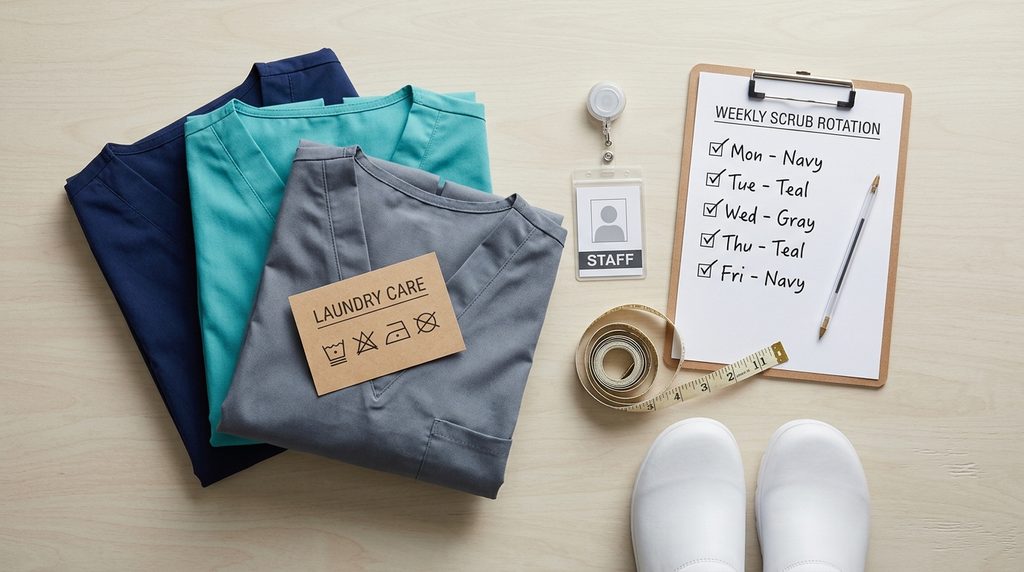
Weekly Scrub Rotation
Scrub rotation helps prevent overuse. Wearing the same one or two sets repeatedly can make them fade, stretch, pill, or wear out faster. A better rotation spreads laundering and wear across multiple uniforms.
Basic Weekly Rotation
A practical full-time rotation may include:
| Work Schedule | Suggested Uniform Rotation |
| 3 shifts per week | 3 sets plus 1 backup |
| 4 shifts per week | 4 sets plus 1 backup |
| 5 shifts per week | 5 sets plus 1 to 2 backups |
| Overtime or rotating schedule | 6 or more sets plus backups |
| Student clinical schedule | Required sets plus backup and lab coat |
This is a planning guide. Workers should adjust based on employer rules, shift length, laundry frequency, and personal comfort.
Why Rotation Helps
A good rotation can help with:
- Less fabric stress
- More consistent appearance
- Fewer laundry emergencies
- Better color preservation
- Longer garment life
- Cleaner weekly planning
- More backup flexibility
- Easier replacement timing
A uniform wardrobe does not need to be excessive. It needs to be organized enough to support the workweek.
How to Store Medical Uniforms
Storage affects how scrubs look and feel. Clean scrubs should be stored in a dry, organized place where they stay fresh and easy to access.
Good storage habits include:
- Folding or hanging scrubs after drying
- Keeping clean scrubs separate from worn clothing
- Storing backup sets together
- Keeping jackets and lab coats on hangers when needed
- Organizing by color if workplace color rules apply
- Keeping pockets empty during storage
- Avoiding damp storage areas
- Checking for wrinkles before the workweek
Workers who wear multiple approved colors may benefit from organizing scrub sets by shift, department, or color.
Caring for Scrub Jackets
Scrub jackets need the same attention as scrub tops and pants. Jackets may include zippers, snaps, knit cuffs, extra pockets, and different fabric weights. These details can require careful washing and drying.
When caring for scrub jackets, workers should:
- Check the garment label
- Close zippers or snaps before washing
- Wash with similar colors
- Avoid excessive dryer heat
- Check cuffs for stretching
- Empty all pockets
- Hang or fold promptly after drying
- Replace jackets when cuffs, zippers, or fabric look worn
Scrub jackets are often worn over clean uniforms, but they still need regular laundering based on workplace use and employer guidance.
Caring for Lab Coats
Lab coats may have different care requirements than scrubs. Some coats are white, structured, embroidered, or worn in settings with specific safety rules. Workers should follow employer policies and garment labels.
Lab coat care may involve:
- Washing separately from dark scrubs
- Treating stains before drying
- Checking buttons or snaps
- Ironing or steaming if allowed
- Hanging after drying
- Replacing coats with permanent stains
- Following school or employer embroidery rules
- Using workplace laundering when required
A lab coat should look clean and professional, especially in patient-facing or student clinical settings.
When Should Healthcare Workers Replace Scrubs?
Scrubs should be replaced before they look noticeably worn or fail to function properly. Waiting too long can affect professional appearance, comfort, and workplace compliance.
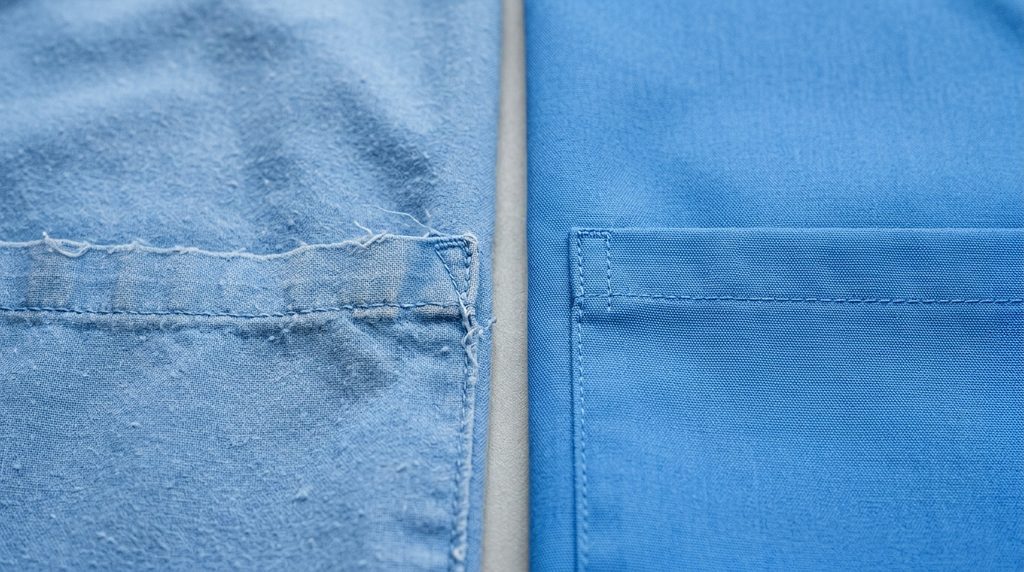
Signs Scrubs Should Be Replaced
Scrubs may need replacing when they show:
- Fading
- Pilling
- Thin fabric areas
- Stretched-out knees
- Sagging waistbands
- Loose jogger cuffs
- Frayed hems
- Worn pocket stitching
- Broken zippers or snaps
- Permanent stains
- Loss of shape
- Poor fabric recovery
- Shrinkage after washing
- Uncomfortable fit changes
A worn scrub set can make an otherwise professional uniform look neglected.
Replacement Timing by Garment Type
Different uniform pieces wear out at different speeds. Pants may show knee wear or waistband stretching. Tops may fade at the neckline or underarms. Jackets may wear at the cuffs. Lab coats may stain or wrinkle heavily.
| Garment Type | Common Wear Signs | Replacement Trigger |
| Scrub tops | Fading, neckline wear, pocket damage | Replace when shape or color looks worn |
| Scrub pants | Knee bagging, waistband sagging, hem wear | Replace when fit or length no longer works |
| Jogger pants | Loose cuffs, stretched knees, fabric pilling | Replace when cuffs or recovery fail |
| Scrub jackets | Worn cuffs, zipper issues, fabric thinning | Replace when layering looks unprofessional |
| Lab coats | Stains, yellowing, button damage, wrinkles | Replace when professional appearance declines |
Replacement timing depends on fabric quality, number of pieces in rotation, shift frequency, laundering habits, and workplace standards.
How to Make Scrubs Last Longer
Scrubs last longer when workers care for them consistently and rotate them properly.
Helpful habits include:
- Buying enough sets for the workweek
- Washing according to the label
- Avoiding excessive dryer heat
- Separating colors
- Treating stains before drying
- Emptying pockets before washing
- Hanging jackets and lab coats when needed
- Avoiding overwearing one favorite set
- Replacing worn pieces one at a time
- Choosing fabrics that match the role
A strong care routine can help workers get better value from their uniform investment.
Uniform Care by Healthcare Role
Different healthcare roles can place different demands on uniforms.
Nurses
Nurses may need durable scrubs that tolerate frequent washing and long shifts. A larger rotation can help reduce overwearing. Pants, tops, and jackets should be checked often for fading, stretching, pocket wear, and waistband performance.
Medical Assistants
Medical assistants may move between patient intake, exam rooms, supplies, and front-office tasks. Their scrubs should stay polished, comfortable, and easy to wash.
Dental Teams
Dental workers may sit, lean, and reach throughout the day. Tops and jackets should be checked for shoulder comfort, sleeve wear, and laundering performance.
Veterinary Staff
Veterinary workers may need especially durable, easy-care uniforms because of bending, lifting, cleaning, pet hair, and frequent laundering. Strong seams and practical fabric can be important.
Healthcare Students
Students should maintain uniforms carefully because schools and clinical sites may have strict appearance standards. Backup sets and clean lab coats can help prevent last-minute issues before clinical days.
Clinical Providers
Doctors, physician assistants, nurse practitioners, and other providers may need scrubs and lab coats that remain polished under patient-facing expectations. Clean lines, wrinkle control, and proper replacement timing matter.
Medical Uniform Care and Safety
Scrubs and uniforms are professional workwear, but they are not replacements for required personal protective equipment. OSHA explains that personal protective equipment helps reduce exposure to workplace hazards that may cause injuries or illnesses.
Depending on the healthcare setting, workers may still need gloves, gowns, masks, eye protection, respirators, or other PPE. Uniform care should support clean workwear routines, while PPE use and handling should follow workplace safety policies.
The CDC provides guidance on healthcare laundry and bedding, including cleaning considerations for healthcare textiles. Healthcare workers should follow employer policies, garment labels, and any infection-control rules that apply to their role.
Buying Replacement Scrubs Online or Locally
Online shopping works well when the worker already knows the correct size, fit, brand, color, and fabric. Local shopping is useful when replacing worn scrubs with updated fits, comparing fabrics, checking pant lengths, or trying jackets and lab coats.
A verified Dayton medical uniform store listing can help local shoppers confirm store details and directions before visiting.
Local shopping can help with:
- Replacing worn scrub sets
- Comparing updated fabric blends
- Checking fit after size changes
- Matching existing scrub colors
- Trying new scrub pants or jackets
- Reviewing lab coat length
- Testing waistband and cuff comfort
- Asking about group uniform needs
Online ordering can help with:
- Reordering known styles
- Buying backup sets
- Replacing worn pieces
- Browsing available colors
- Shopping outside store hours
- Building a consistent uniform rotation
A combined approach often works best. Try new fabric or fit options locally, then reorder preferred pieces online once sizing is confirmed.
Common Medical Uniform Care Mistakes
Many scrub care problems happen because workers treat medical uniforms like ordinary casual clothing.
Avoid these mistakes:
- Ignoring garment care labels
- Washing all scrub colors together
- Leaving pens or items in pockets
- Using excessive dryer heat
- Drying stains before treating them
- Wearing the same set too often
- Keeping too few backup uniforms
- Forgetting to wash jackets and lab coats
- Waiting too long to replace worn pieces
- Ignoring workplace laundering policies
- Treating scrubs as replacements for PPE
- Buying several replacement sets before confirming fit
A simple care routine can prevent many of these issues.
Final Thoughts
Medical uniform care should include proper washing, drying, storage, weekly rotation, and timely replacement. Scrubs should be cleaned after wear, dried according to fabric instructions, stored properly, and rotated across enough sets to prevent overuse.
Healthcare workers should replace scrubs when fabric fades, pills, thins, stretches, stains permanently, loses shape, or no longer meets workplace standards. A consistent care routine helps medical uniforms stay clean, professional, comfortable, and ready for long healthcare shifts.

FAQs
How often should healthcare workers wash scrubs?
Most healthcare workers should wash scrubs after each wear, especially after patient-facing or clinical shifts. Workers should follow employer policies, garment labels, and any infection-control rules that apply to their workplace. Visibly soiled uniforms should be handled according to workplace guidance.
Can scrubs be washed with regular clothes?
Some workers wash scrubs separately from regular clothing to protect workwear, reduce lint transfer, and simplify cleaning. Workplace policies may also provide specific laundering instructions. Scrubs should be washed with similar colors and fabrics, and pockets should be emptied before laundering.
How many scrub sets should be in rotation?
Many full-time healthcare workers benefit from 4 to 5 scrub sets plus at least 1 backup set. Workers with overtime, rotating schedules, or limited laundry time may need more. Part-time workers or students may need fewer depending on their schedule and uniform rules.
When should scrubs be replaced?
Scrubs should be replaced when they fade, pill, thin, stretch out, shrink, stain permanently, lose shape, or no longer meet workplace appearance standards. Waistbands, cuffs, pockets, hems, and seams should also be checked for wear.
How can scrubs last longer?
Scrubs can last longer when workers follow care labels, avoid excessive dryer heat, separate colors, treat stains before drying, rotate multiple sets, empty pockets before washing, and replace individual worn pieces before the entire wardrobe breaks down.