
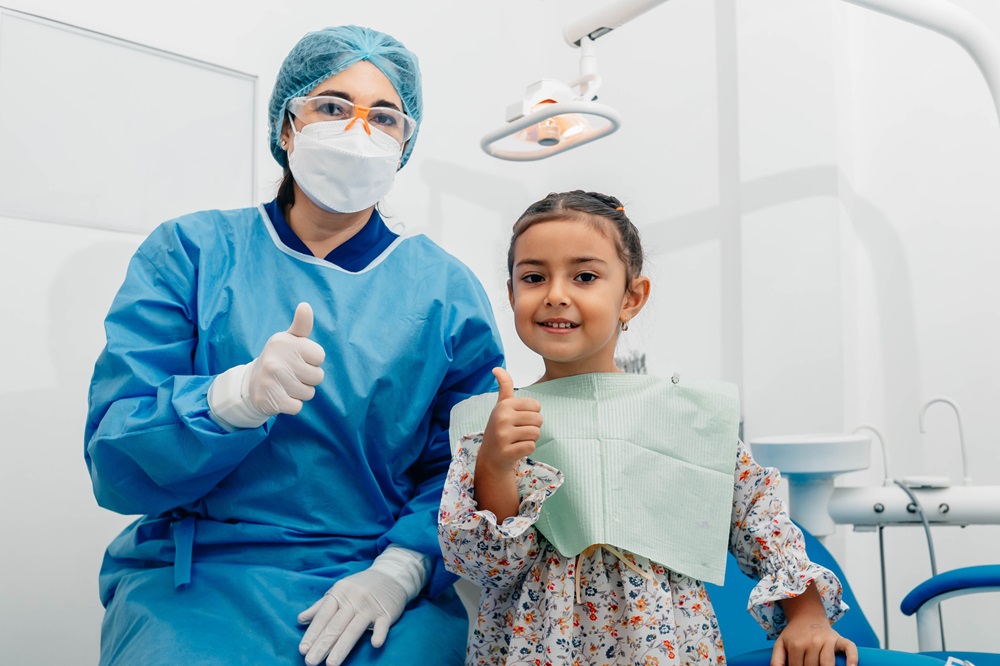
Toddlers refusing to open their mouths at the dentist is one of the most common challenges pediatric dental offices deal with. It’s not a bad parenting problem – it’s a developmental one.
A kids dentist Saskatoon families rely on sees this every single week. According to the American Academy of Pediatric Dentistry, dental fear affects up to 20% of children, with toddlers being the most resistant age group.
Here’s how trained pediatric dentists actually handle it.
What Do Dentists Do When a Toddler Keeps Their Mouth Shut?
They don’t force it. The first response is almost always distraction and rapport-building, not restraint.
Pediatric dentists train specifically for child behaviour management – it’s a required part of their specialty education. The most widely used method is called tell-show-do.
The dentist tells the child what’s about to happen in simple words, shows them the tool (like a mirror or a small counter), and then does the action.
Research shows this method significantly reduces anxiety in children aged two to five during dental exams.
The goal in a first or second appointment isn’t always to complete a full exam.
Sometimes the visit is just about getting the child comfortable in the chair, which is a legitimate clinical objective on its own.
How Do Dentists Keep Toddlers Calm Enough to Cooperate?
Most use a combination of voice control, positioning, and environmental adjustments.
Voice control doesn’t mean raising their voice. It means deliberately shifting tone – speaking more firmly and clearly to redirect the child’s attention when they’re starting to spiral.
Studies in pediatric dentistry journals show this technique is effective at refocusing children without causing additional distress.
Positioning also plays a role. Many pediatric dentists use the knee-to-knee position for very young toddlers – the parent and dentist sit facing each other with their knees touching, and the child lies across both laps.
This keeps the child close to the parent while giving the dentist access to the mouth. Parents are present the whole time, which matters a lot to most toddlers.
The environment helps too. Child-focused dental offices are designed to reduce stimulation overload – softer lighting, ceiling TVs showing cartoons, smaller instruments, and staff who speak to children at eye level all reduce the baseline anxiety before the dentist even approaches.
What Happens If a Toddler Absolutely Will Not Cooperate?
The dentist reschedules or adjusts the plan. There’s no point forcing a non-emergency exam if it creates a lasting fear response.
That said, if there’s an urgent dental issue – a cavity causing pain or an infection – dentists have additional options.
Nitrous oxide (laughing gas) is commonly used for young children who are anxious. It’s safe, fast-acting, and wears off quickly. For more significant treatment needs, some children are referred for treatment under general anaesthesia in a hospital setting, though this is reserved for cases where the work cannot wait and the child’s distress or safety makes office treatment not viable.
The Canadian Dental Association notes that early, positive dental experiences are one of the strongest predictors of long-term dental health behaviour – which is why forcing a traumatic exam is seen as counterproductive even when it’s technically possible.
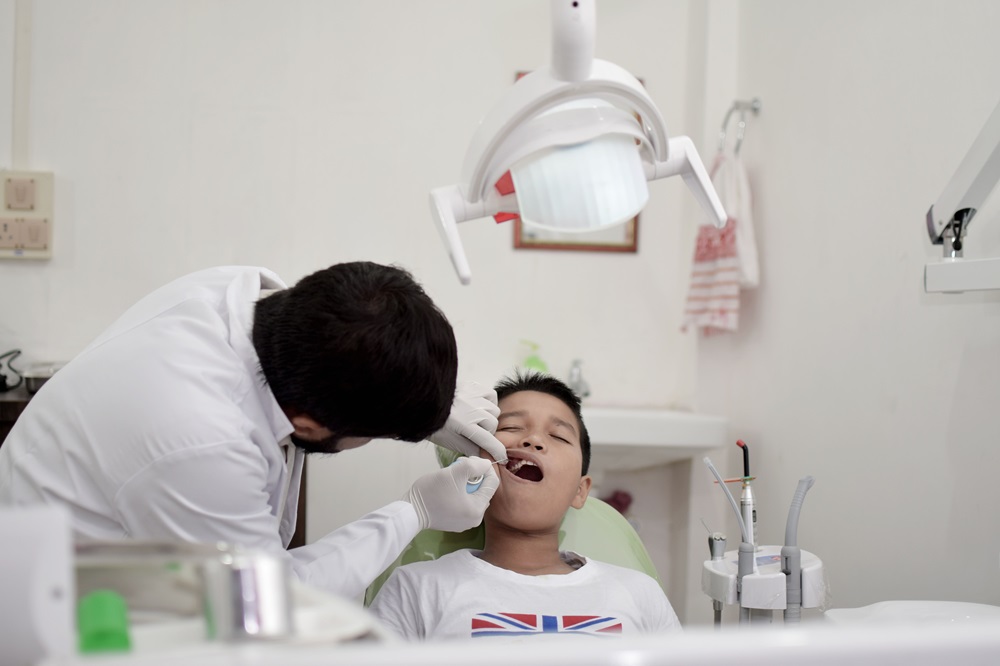
FAQs
At what age should a toddler first see a dentist?
Most pediatric dental organisations, including the Canadian Dental Association, recommend the first visit within six months of the first tooth appearing, or by age one – whichever comes first.
Is it normal for toddlers to cry the entire appointment?
Yes, and most pediatric dentists are trained to work through it. Crying doesn’t automatically mean the child is traumatised – it’s a normal stress response.
Should you tell your toddler about the dentist beforehand?
Keep it simple and honest. Avoid using words like “hurt,” “needle,” or “drill” at home. Some parents read child-friendly books about dental visits in the days before the appointment.
Can a parent stay in the room during the exam?
In most pediatric dental offices, yes – especially for toddlers. Having a familiar face nearby helps manage anxiety significantly.
How do you find a good kids dentist Saskatoon families can trust for anxious toddlers?
Look for a dentist with a pediatric specialty designation, which means they completed two to three years of additional training beyond dental school focused specifically on children.