Michigan homeowners face unique heating and cooling challenges. Long, cold winters require dependable heating, while warm, humid summers demand reliable air conditioning. Because HVAC systems must perform well throughout the year, many homeowners wonder whether investing in a modern heat pump is a smart long-term decision.
In the past, heat pumps were often associated with warmer climates, leading many people to question whether they could perform effectively during Michigan winters. However, significant improvements in cold-climate technology have changed that perception. Modern heat pumps are engineered to deliver efficient heating even in freezing conditions while also providing dependable cooling during the summer.
Whether replacing an aging furnace, upgrading an air conditioner, or planning a new construction project, homeowners increasingly compare heat pumps with traditional HVAC systems to determine which option offers the best combination of comfort, efficiency, and long-term value.
Many homeowners begin researching professional heat pump installation near me to better understand which systems are best suited for Michigan’s climate.
Quick Answer
For many Michigan homes, modern heat pumps are a worthwhile investment. They provide efficient heating and cooling from one system, reduce energy consumption during much of the year, improve comfort, and may lower long-term operating costs. The best choice depends on home insulation, heating requirements, utility costs, and the type of heat pump installed.
Key Takeaways
- Modern heat pumps perform well in Michigan’s climate.
- Cold-climate technology has significantly improved.
- Heat pumps provide both heating and cooling.
- Energy savings depend on home efficiency and utility costs.
- Proper installation is critical for long-term performance.
- Hybrid systems offer additional flexibility during severe winters.
- Heat pumps can improve year-round comfort.
- Long-term value extends beyond monthly utility savings.
Why More Michigan Homeowners Are Choosing Heat Pumps
Growing interest in energy-efficient homes has made heat pumps one of the fastest-growing HVAC technologies in North America.
Several factors contribute to this trend:
- Rising utility costs
- Improved equipment technology
- Better cold-weather performance
- Increased environmental awareness
- Year-round heating and cooling capability
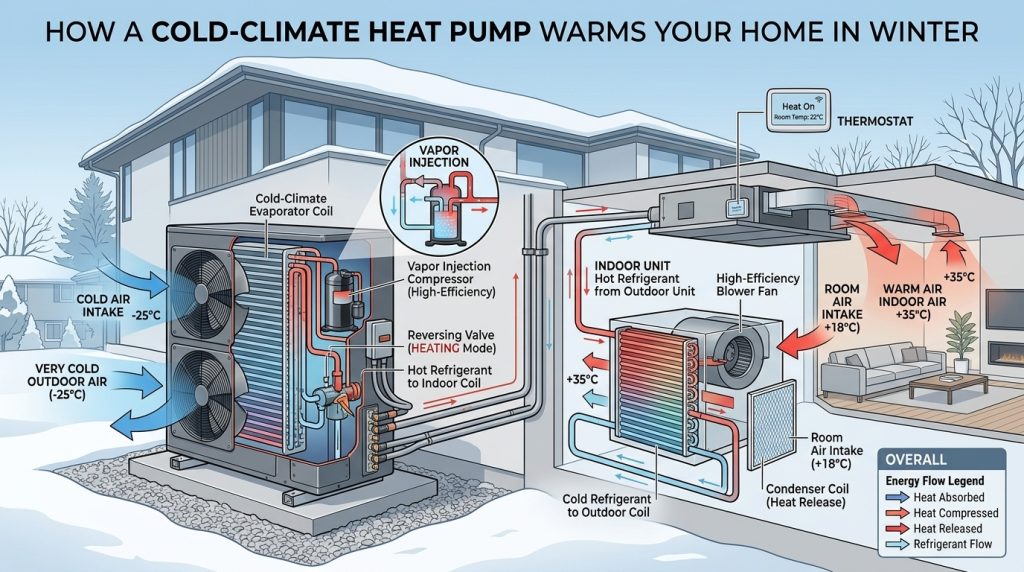
Unlike conventional furnaces, heat pumps transfer heat rather than generating it through combustion.
According to the U.S. Department of Energy, modern heat pump systems can deliver highly efficient heating and cooling by moving heat instead of producing it.
How Heat Pumps Perform During Michigan Winters
One of the biggest concerns homeowners have is winter performance.
Today’s cold-climate heat pumps incorporate:
- Variable-speed inverter compressors
- Advanced refrigerants
- Intelligent defrost controls
- Improved heat exchanger designs
- Smart electronic controls
These technologies allow many systems to continue providing dependable heating even when outdoor temperatures fall below freezing.
During periods of extremely cold weather, some homeowners choose hybrid heating systems that combine a heat pump with a furnace for additional flexibility.
A properly designed crossover heat pump system automatically switches between heating sources based on outdoor temperatures, maximizing both comfort and efficiency.
Energy Efficiency Compared with Traditional Systems
Heat pumps are widely recognized for their energy efficiency.
Rather than burning fuel, they transfer heat between indoor and outdoor environments.
Potential efficiency benefits include:
- Reduced energy consumption
- Lower greenhouse gas emissions
- Improved seasonal efficiency
- Lower operating costs under many conditions
Efficiency gains vary depending on:
- Outdoor temperatures
- Home insulation
- Thermostat settings
- Equipment sizing
- Maintenance quality
For many homeowners, energy savings accumulate gradually over the lifespan of the equipment.
One System for Every Season
Unlike a furnace that provides only heating, a heat pump performs two important functions.
During winter:
- Provides efficient heating
During summer:
- Operates as an air conditioner
Because one system provides year-round climate control, homeowners often simplify HVAC maintenance while reducing the need for separate heating and cooling equipment.
Ductless Options Increase Flexibility
Not every Michigan home has existing ductwork.
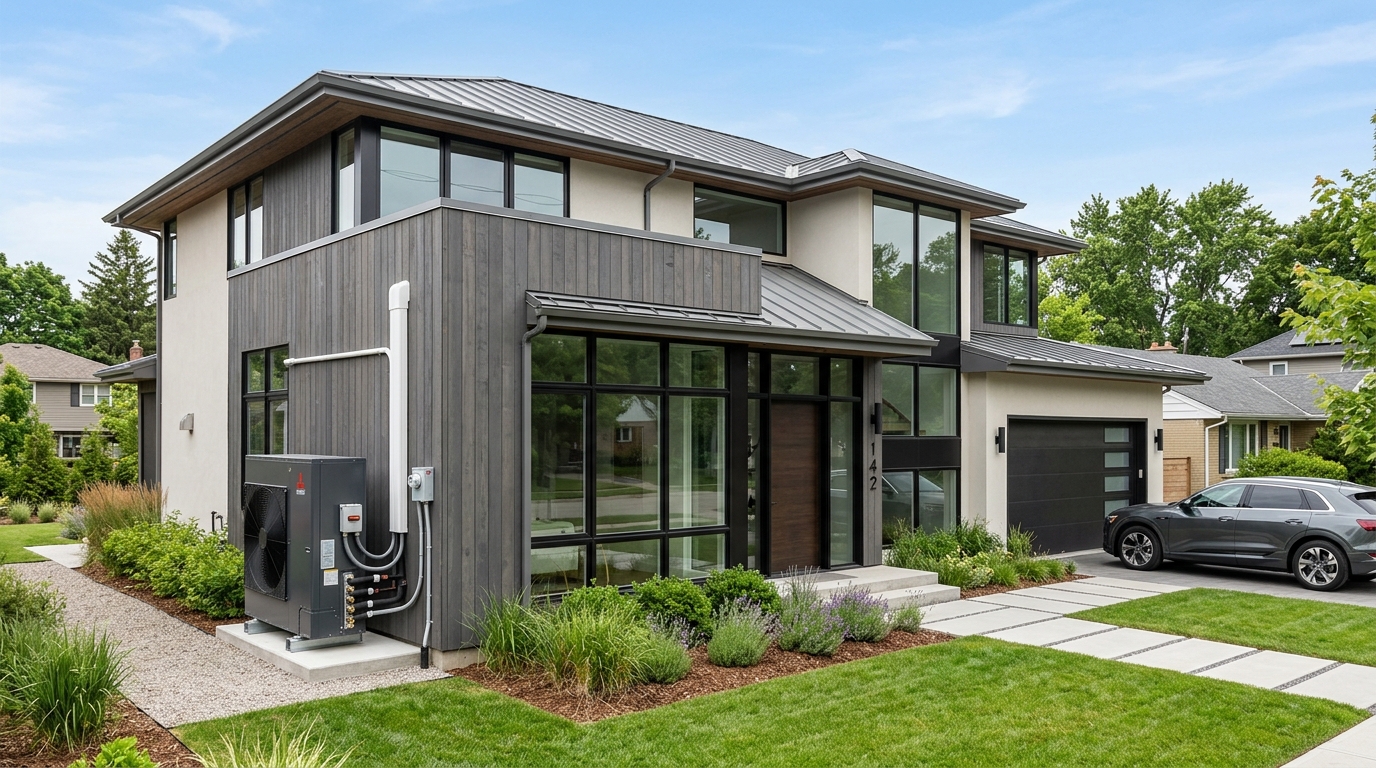
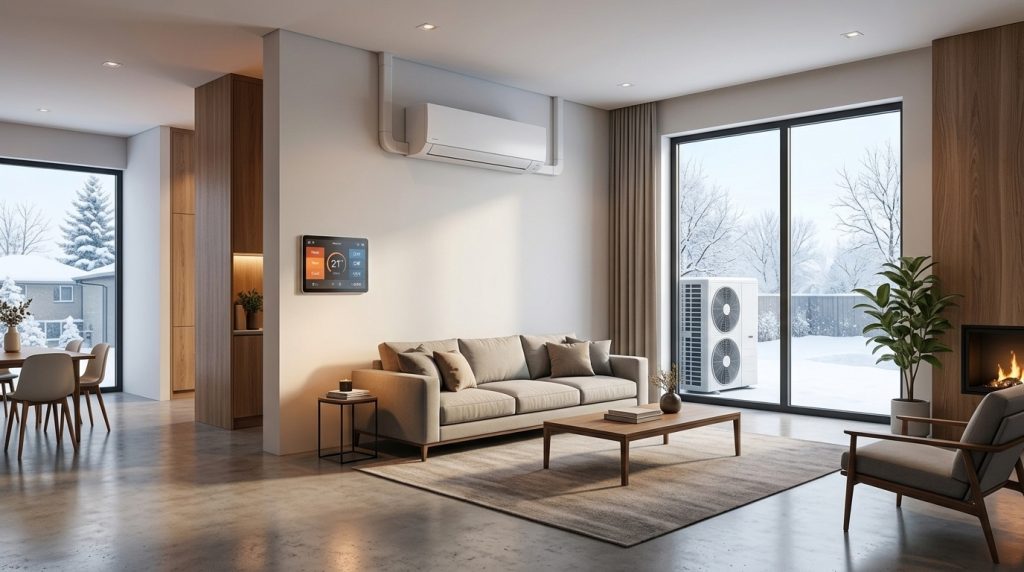
For older homes, additions, finished basements, garages, or detached buildings, a modern ductless heat pump system may provide an efficient alternative to installing traditional ducts.
Ductless systems also offer:
- Zoned temperature control
- Flexible installation
- Reduced duct losses
- Improved room-by-room comfort
- Quiet operation
These benefits have made ductless heat pumps increasingly popular for renovation projects throughout Michigan.
Factors That Affect Long-Term Value
The value of a heat pump depends on more than the purchase price.
Homeowners should consider:
- Installation quality
- Equipment efficiency
- Utility costs
- Maintenance requirements
- Equipment lifespan
- Home insulation
- Comfort expectations
A properly designed system often delivers greater long-term value than simply selecting the lowest-cost equipment.
Cost vs. Long-Term Value
When evaluating whether a heat pump is worth the investment, it’s important to look beyond the initial purchase price.
In many cases, installing a heat pump costs more upfront than replacing a conventional furnace or air conditioner. However, the long-term value often comes from improved efficiency, lower operating costs, and year-round functionality.
Factors that influence long-term value include:
- Equipment efficiency
- Local utility rates
- Home insulation
- System sizing
- Installation quality
- Maintenance practices
- Equipment lifespan
For homeowners planning to remain in their home for many years, the cumulative energy savings and improved comfort may offset part of the initial investment.
Environmental Benefits
Many homeowners also consider environmental impact when selecting new HVAC equipment.
Because heat pumps transfer heat instead of generating it through combustion, they often reduce overall energy consumption compared with less efficient heating systems.
Potential environmental benefits include:
- Reduced greenhouse gas emissions
- Lower fossil fuel consumption
- Improved seasonal energy efficiency
- Reduced household energy demand
The U.S. Environmental Protection Agency recognizes ENERGY STAR certified heat pumps as some of the most energy-efficient residential heating and cooling systems available.
Following recognized indoor air quality best practices alongside efficient HVAC operation can further improve comfort and support healthier indoor environments.
Common Misconceptions About Heat Pumps
Although modern heat pumps have become increasingly popular, several misconceptions remain.
“Heat Pumps Don’t Work in Michigan”
This was a common concern with older equipment.
Today’s cold-climate heat pumps are specifically engineered to provide dependable heating during Michigan winters and continue operating efficiently at temperatures well below freezing.
“Heat Pumps Are Only for New Homes”
Modern heat pumps can be installed in:
- Existing homes
- Older homes
- Renovation projects
- Home additions
- New construction
- Detached buildings
Both ducted and ductless systems provide flexible installation options.
“Heat Pumps Cost Too Much to Operate”
Operating costs depend on:
- Utility rates
- Home insulation
- Outdoor temperatures
- Equipment efficiency
- Installation quality
For many homeowners, modern heat pumps reduce annual energy consumption compared with older HVAC equipment.
Choosing the Right HVAC Contractor
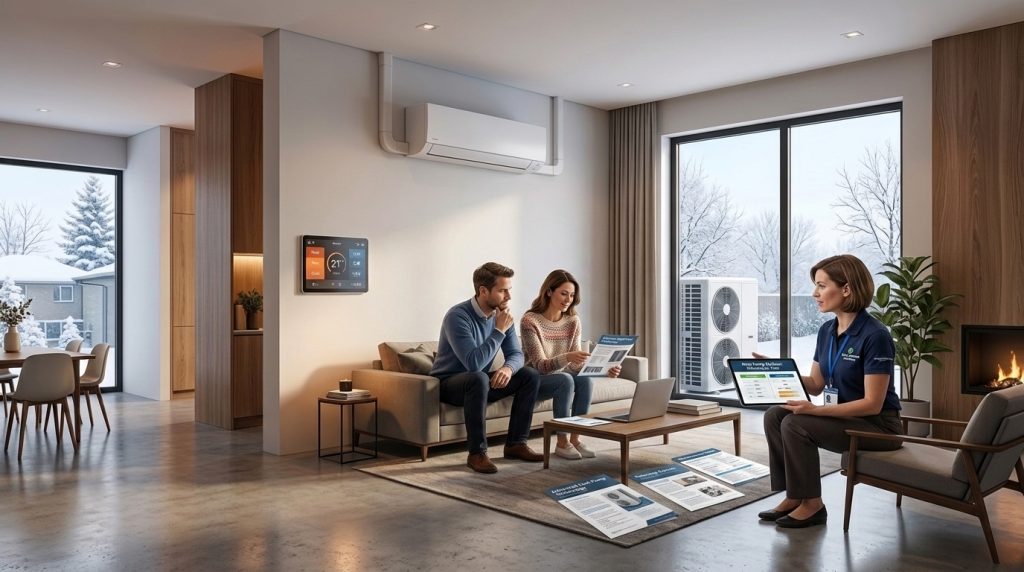
Even the highest-quality equipment cannot perform efficiently if it is improperly installed.
When evaluating companies for a heat pump installation near me, homeowners should consider:
- Cold-climate heat pump experience
- Licensing and certifications
- Professional load calculations
- Equipment recommendations
- Warranty support
- Preventative maintenance programs
Many homeowners also review public business profiles to better understand customer experiences, responsiveness, and installation quality before selecting an HVAC contractor.
A knowledgeable contractor can recommend equipment that matches the home’s size, insulation level, and heating requirements while helping homeowners maximize long-term system performance.
Is a Heat Pump Right for Every Home?
Although heat pumps offer numerous advantages, no HVAC solution is ideal for every property.
A heat pump may be an excellent choice for homeowners who:
- Want one system for heating and cooling
- Prioritize energy efficiency
- Plan to remain in their home long term
- Have well-insulated homes
- Want lower seasonal energy consumption
Other homeowners may benefit from hybrid HVAC systems or conventional furnaces depending on:
- Home construction
- Existing HVAC equipment
- Utility costs
- Budget
- Comfort preferences
A professional evaluation remains the best way to determine which system is most appropriate for an individual home.
Conclusion
Modern heat pumps have become a practical and efficient heating and cooling solution for many Michigan homeowners. Advances in cold-climate technology have significantly improved winter performance, making today’s systems capable of delivering dependable comfort throughout much of the year.
While the initial investment may be higher than some traditional HVAC systems, many homeowners find value in lower energy consumption, improved comfort, quieter operation, and year-round climate control. Ductless systems and hybrid heating options provide additional flexibility for homes with varying layouts and heating needs.
Ultimately, whether a heat pump is “worth it” depends on each home’s construction, insulation, utility costs, and long-term ownership goals. Working with an experienced HVAC professional helps ensure the selected system is properly designed, correctly installed, and positioned to provide reliable performance for years to come.
Frequently Asked Questions
Are heat pumps really worth installing in Michigan?
For many homeowners, yes. Modern cold-climate heat pumps are designed to perform efficiently during Michigan winters while also providing cooling during the summer. Their long-term value depends on factors such as home insulation, energy costs, equipment quality, and professional installation.
Do heat pumps work when temperatures fall below freezing?
Yes. Today’s cold-climate heat pumps are engineered to continue operating efficiently during freezing weather. Many systems provide dependable heating well below 0°F, although performance varies by equipment model and installation quality.
Is professional heat pump installation important?
Absolutely. Proper heat pump installation near me ensures accurate load calculations, correct equipment sizing, refrigerant charging, airflow balancing, and system calibration. These factors have a major impact on efficiency, comfort, and long-term reliability.
How much can a heat pump reduce energy costs?
Actual savings vary depending on:
- Home insulation
- Utility rates
- Existing HVAC equipment
- Thermostat settings
- Weather conditions
- Equipment efficiency
Many homeowners experience lower annual energy consumption compared with older heating and cooling systems.
Can a heat pump replace both my furnace and air conditioner?
In many homes, yes. A heat pump provides both heating and cooling from a single system. Some homeowners in colder climates also choose hybrid systems that combine a heat pump with a gas furnace for additional flexibility during extreme winter weather.
What is a ductless heat pump system?
A ductless heat pump system delivers heating and cooling without traditional ductwork. These systems are commonly installed in older homes, room additions, garages, basements, and spaces where duct installation would be difficult.
What is a crossover heat pump?
A crossover heat pump (also called a dual fuel or hybrid system) combines a heat pump with a gas furnace. The system automatically selects the most efficient heating source based on outdoor temperatures.
Are heat pumps environmentally friendly?
Yes. Because heat pumps transfer heat instead of generating it through combustion, they often reduce energy consumption and greenhouse gas emissions compared with many traditional heating systems.
How long does a heat pump typically last?
With proper installation and routine maintenance, many residential heat pumps provide reliable service for 12 to 20 years. Equipment quality, climate, and maintenance practices all influence system lifespan.
Are heat pumps quieter than traditional HVAC systems?
Generally, yes. Modern variable-speed compressors and advanced fan designs allow many heat pumps to operate more quietly than older furnaces and conventional air conditioners.
What homes benefit most from heat pumps?
Heat pumps are often an excellent choice for:
- Well-insulated homes
- New construction
- Older homes with HVAC upgrades
- Homes needing both heating and cooling
- Properties seeking greater energy efficiency
- Homes considering hybrid heating solutions
How can homeowners decide if a heat pump is the right investment?
The best approach is to evaluate:
- Home size
- Insulation levels
- Existing HVAC equipment
- Utility costs
- Comfort expectations
- Long-term ownership plans
A professional HVAC assessment can help determine whether a heat pump is the most suitable solution.